Neuroscience

Neuroplasticity
For as long as I can remember, I’ve had an interest in how our minds work, why we do the things we do and, ultimately, how we can improve ourselves. I’ve read countless books on psychology, philosophy, and self-development. However, I’d never really paid much attention to how the brain physically works until around 18 months ago, when I read a book on neuroplasticity.
In short, neuroplasticity is the brain’s ability to reorganise itself in response to experience, learning and behaviour. Contrary to popular belief, our brains are not simply hardwired once we reach adulthood. Brain plasticity does reduce in some respects compared with early childhood, but the adult brain remains capable of meaningful change. So, perhaps a leopard can change its spots.
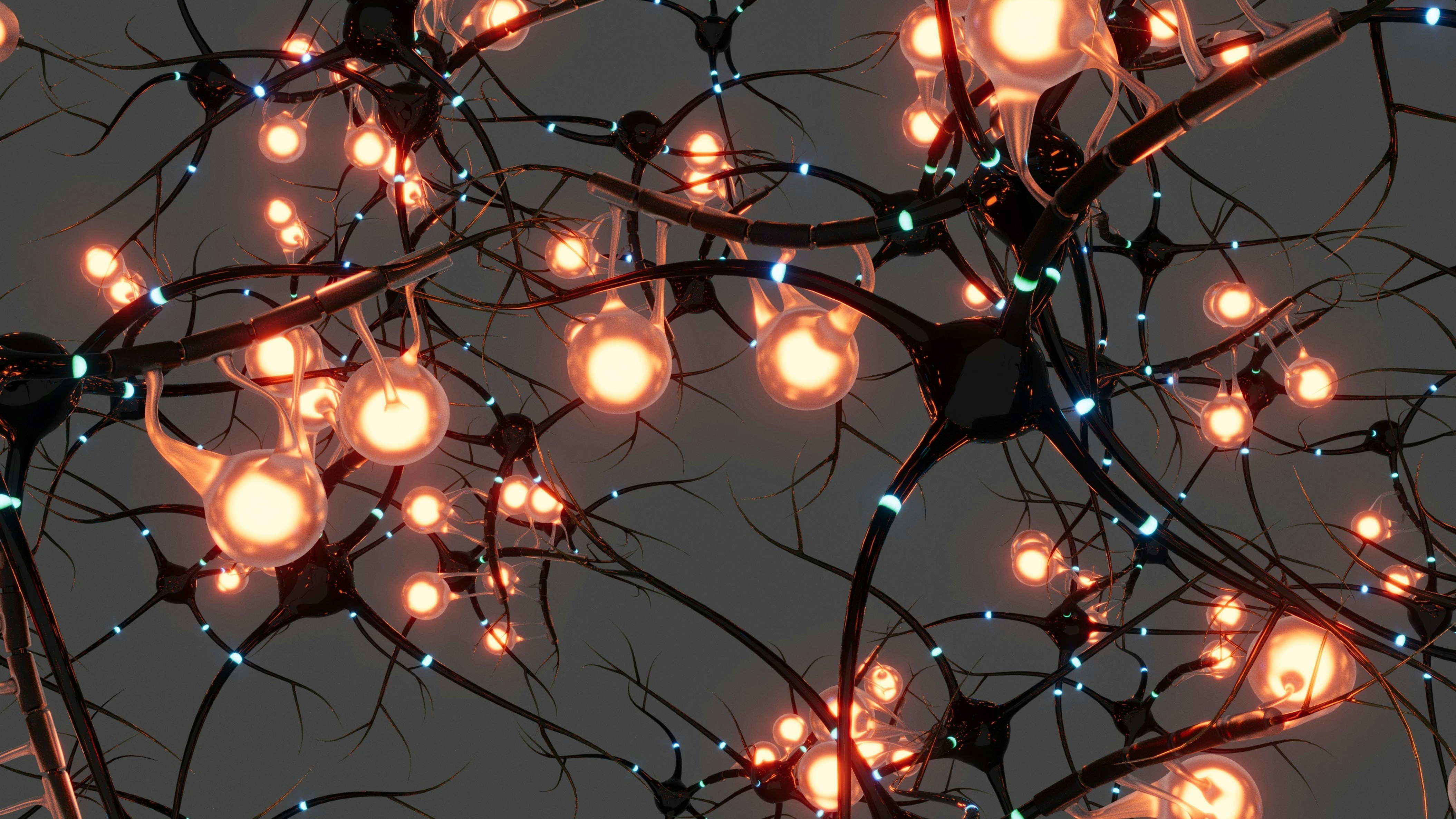
The adult human brain contains around 86 billion neurons. When groups of neurons repeatedly become active together through learning and experience, the connections between them can strengthen. Over time, frequently used neural pathways can become easier for the brain to activate again.
In the spirit of practising what I preach, I decided to draw my own neuron rather than use a stock image. Drawing isn't one of my strengths (I was still drawing stick men until today), but learning and attempting unfamiliar things gives the brain new challenges to respond to. I won't be giving up the day job to become an illustrator anytime soon, but having a go seemed appropriate for an article about neuroplasticity.
The dendrites receive signals from other neurons, which are processed by the cell body (soma). The nucleus helps control the cell's activity. The axon then carries electrical signals away from the cell body to the axon terminals, where signals can be passed on to other cells.
You may have heard the phrase “neurons that fire together, wire together.” This is a popular shorthand for a principle proposed by psychologist Donald Hebb in 1949, which became known as Hebbian learning.
One way to picture how patterns can become more established through repetition is to think of a path through a forest. If there is already a well-worn path, it’s easier to take that route. But imagine there’s another path that you know would lead to a better destination. At first, creating and walking that new path takes more effort. Keep using it though, and gradually the path becomes clearer and easier to follow. Eventually, taking that route can begin to feel much more natural.
For example, think about something you regularly avoid because it makes you uncomfortable. Avoidance may be the well-worn path, but each time you choose to face it instead, you're practising a different response which can become easier over time.
It’s important to understand that neuroplasticity itself is neutral. It doesn't distinguish between changes that are helpful to us and those that aren't. Repeated experiences and behaviours can strengthen useful patterns, but they can also contribute to patterns we'd rather change.
Simply understanding this can make us more aware of the paths we repeatedly take. If experience helped shape some of our existing patterns, new experiences and deliberately practising different behaviours and responses can help us develop new ones.
How can coaching help?
Coaching can help someone identify patterns and then practise doing something differently. Understanding why we repeatedly think or behave in a particular way can be useful, but understanding it alone doesn’t necessarily change it.
Change requires doing something differently and often, repeating it until the new response starts to become more familiar. Think back to that forest path: knowing another route exists isn't the same as actually walking it.
Coaching can provide the space to recognise these patterns, explore alternative ways of responding and, importantly, turn that understanding into action.
Why does this matter to me?
Neuroplasticity isn’t a new discovery, but our understanding of how and when the brain can change has developed enormously. For me, learning about it opened the door to a different way of understanding ourselves and our capacity for change.
For years, I’d read about why we think, act and behave the way we do, but I’d never really understood how. Learning about neuroplasticity helped connect the two. It gave me a better understanding of how our experiences, behaviours and learning can physically shape the brain over time.
Understanding neuroplasticity won’t change you overnight, and knowing about it isn't enough on its own. But understanding that the brain remains capable of change can give us a very different perspective on habits, behaviour and learning.
It’s an idea that has had a huge influence on the way I think about personal change, and one that now helps inform my approach to coaching.